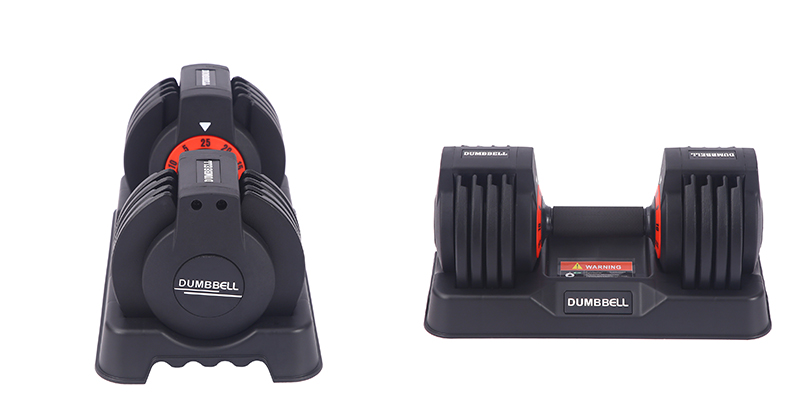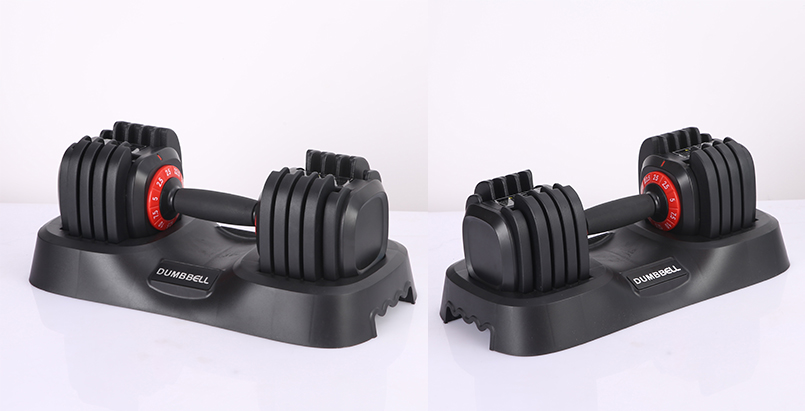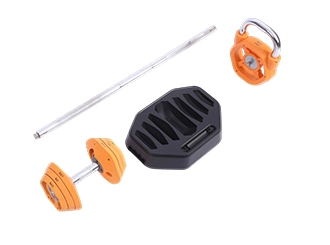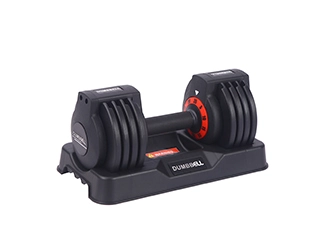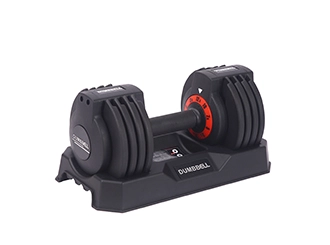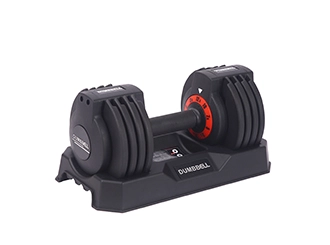
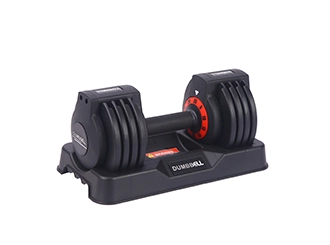
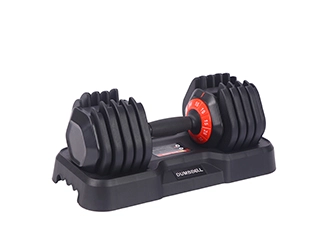
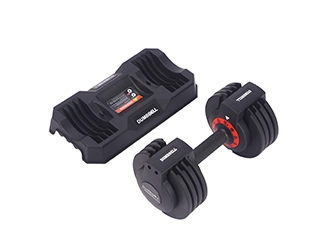
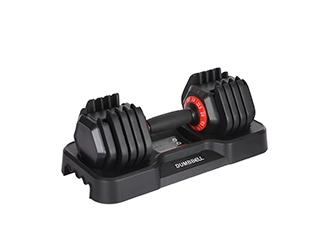
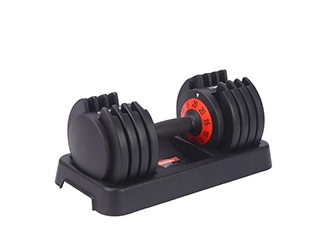
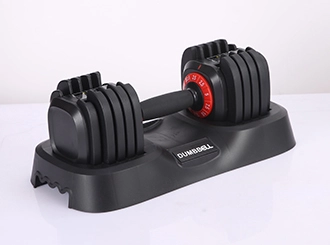
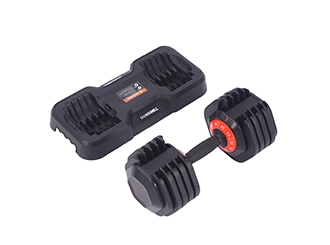
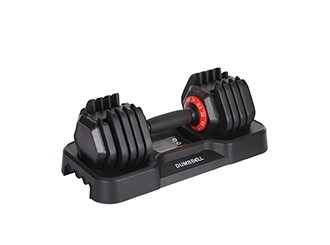
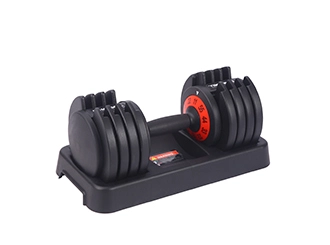
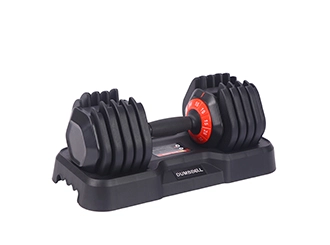
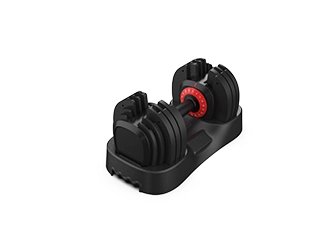
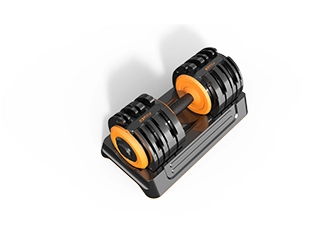
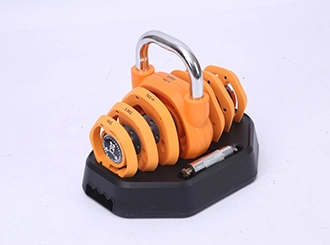
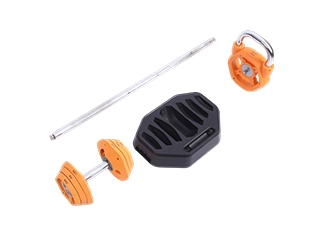
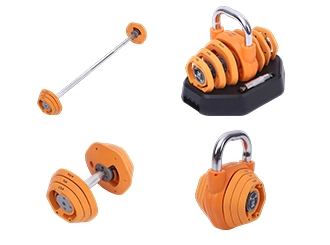
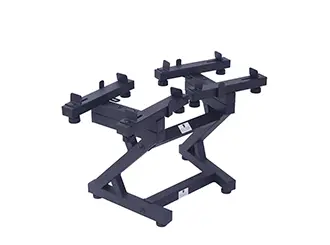
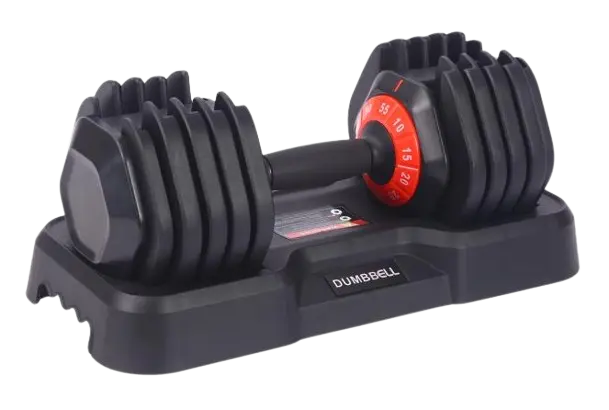
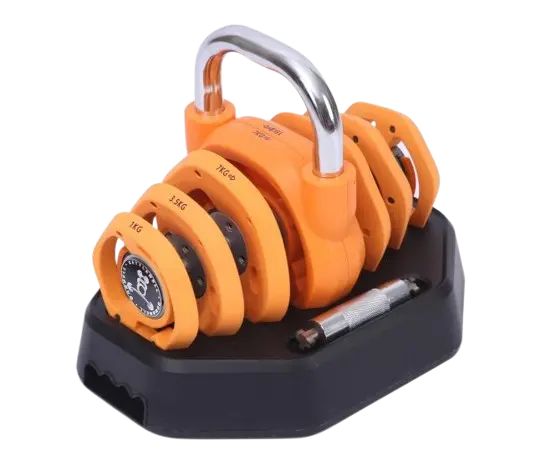
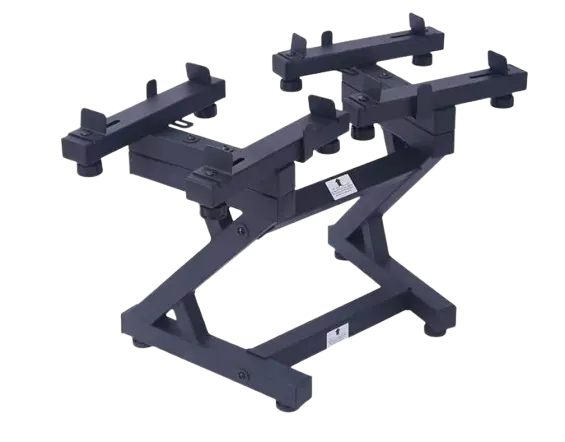


Round and square adjustable dumbbells can provide the same basic benefit: multiple selectable weights in one compact piece of equipment. The real difference is not simply appearance. Shape can influence how a dumbbell sits on the floor, how it fits into a storage area, how the product looks in a fitness range, and how users handle it between sets.
However, shape alone does not determine weight capacity, number of weight settings, material or adjustment mechanism. Those factors depend on the individual model.
For that reason, the best choice is not automatically “round” or “square.” It depends on how and where the dumbbell will be used.
For buyers who want a quick comparison:
Square adjustable dumbbells generally have flatter external surfaces, which can help reduce unwanted rolling when the dumbbell is placed on a flat floor.
Round adjustable dumbbells provide a more traditional dumbbell appearance and are available in a wide variety of adjustable configurations.
Neither shape is automatically better for weight range or adjustment precision. Those specifications must be compared model by model.
For distributors and retailers, shape can also be useful for differentiating products within an adjustable dumbbell range.
If floor stability is your main concern, a square design may have an advantage. If appearance, model selection or a particular weight configuration matters more, a round design may be equally suitable.
Factor | Round Adjustable Dumbbells | Square Adjustable Dumbbells |
Overall Shape | Rounded exterior profile | Flat-sided or square profile |
Tendency to Roll | Depends on exterior design and contact surface; rounded profiles can move more easily | Flat sides generally help limit rolling |
Storage | Depends heavily on base and product dimensions | Flat geometry can provide predictable positioning |
Weight Range | Model-specific | Model-specific |
Number of Weight Settings | Model-specific | Model-specific |
Adjustment System | Depends on model | Depends on model |
Training Use | Suitable for general strength training | Suitable for general strength training |
Visual Style | More traditional dumbbell appearance | More geometric, modern appearance |
Best Choice For | Buyers who prefer traditional styling or specific round models | Buyers prioritizing flat-sided positioning or square styling |
The most important takeaway is that shape should be one selection factor, not the only selection factor.

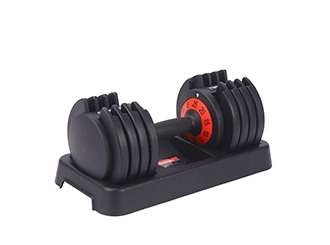
Round adjustable dumbbells use weight plates or outer housings with a predominantly circular or rounded profile.
They retain the appearance that many users already associate with traditional dumbbells while combining several selectable weights into one adjustable system.
Jiebao's round dumbbell set includes weights in different capacities, giving buyers options for building a broader, more adjustable fitness range.
Familiar appearance
Round dumbbells have a traditional free-weight look that is immediately recognizable to consumers.
Multiple product configurations
The external shape does not restrict a dumbbell to one maximum weight or one adjustment format. Round adjustable models can still be offered with different selectable weight ranges.
Useful for varied product positioning
Retailers can use round models as part of entry-level, mid-range or heavier adjustable dumbbell collections depending on the actual specification.
A genuinely rounded exterior can be more prone to movement if the dumbbell is placed directly on a flat surface.
However, this should not be generalized to every product. Many adjustable dumbbells are used together with a dedicated holder or base, and the exact plate and housing geometry differs between models.

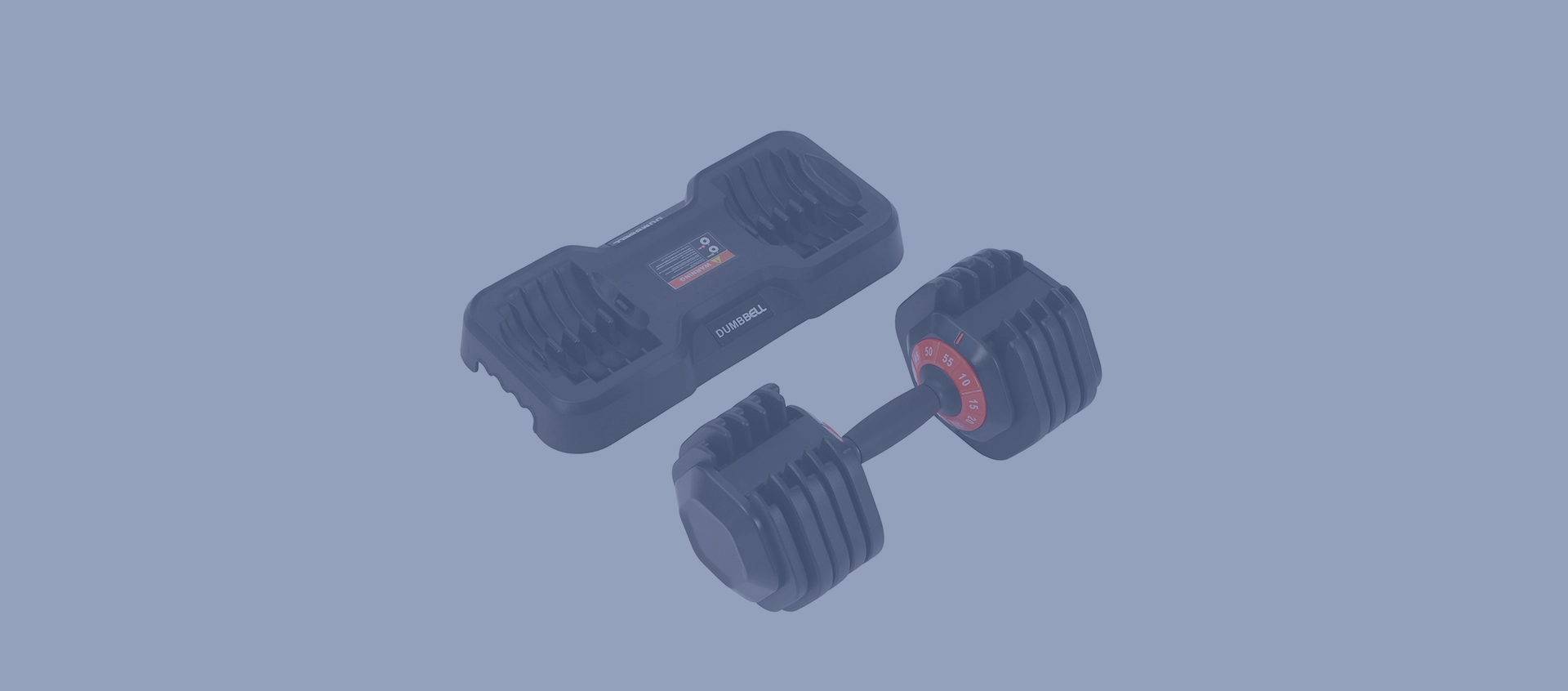
Square adjustable dumbbells use flatter external surfaces and a more geometric overall shape.
One of their clearest practical characteristics is that flat sides generally make the dumbbell less likely to roll when placed on a level surface.
Buyers interested in this format can explore Jiebao's square adjustable dumbbells and compare the exact specifications with round alternatives.
Reduced rolling
Flat external surfaces can help the dumbbell remain in place when set down between exercises.
Distinct visual positioning
Square designs look noticeably different from traditional round dumbbells, which can help retailers differentiate products within the same category.
Predictable placement
The flatter shape can make the resting orientation of the dumbbell more predictable, although actual stability still depends on the complete housing and base design.
Square does not automatically mean smaller.
Overall storage space depends on the complete length, width and height of the product—not simply whether the exterior is round or square.
That distinction becomes clear when comparing actual products.
A useful way to understand why shape should not be considered in isolation is to compare two Jiebao products with the same 25LB maximum weight.
The JB2106 is categorized as a round adjustable dumbbell, while the JB2320 is a square adjustable dumbbell. Both use cast iron as the listed main weight material, but their dimensions and weight-setting configurations differ significantly.
| Specification | Round JB2106 | Square JB2320 |
| Maximum Weight | 25LB | 25LB |
| Number of Weight Settings | 5 | 10 |
| Weight Settings | 5 / 10 / 15 / 20 / 25LB | 2.5 / 5 / 7.5 / 10 / 12.5 / 15 / 17.5 / 20 / 22.5 / 25LB |
| Product Size | 36.5 × 19.5 × 16.7CM | 44.2 × 20.8 × 15.6CM |
| Net / Gross Weight | 11.3 / 12.5KG | 11.3 / 12.5KG |
| Main Weight Material | Cast Iron | Cast Iron |
These published specifications illustrate an important point.
The square JB2320 provides 10 selectable levels, while the round JB2106 provides 5 selectable levels. But that does not mean square dumbbells inherently provide more settings. It only means these two particular models use different adjustment configurations.
Likewise, the round JB2106 is shorter in this specific comparison, so it would be incorrect to claim that square dumbbells are always more compact.
This is why buyers should compare the actual model specifications, rather than choosing by shape alone.
Not necessarily.
The number of weight settings and the size of each increment are determined primarily by the product's weight-selection system and plate configuration.
For example, two adjustable dumbbells can both have a 25LB maximum capacity while providing very different increments.
A user choosing between the JB2106 and JB2320 is therefore comparing more than:
Round vs square.
The practical comparison is:
Round + 5 weight levels vs square + 10 weight levels.
That is much more useful when deciding which product fits a particular market.
Both can work well.
Adjustable dumbbells already consolidate multiple resistance levels into one product, which reduces the need to store several separate fixed dumbbells.
For a small room or apartment, compare:
Overall product dimensions
Base or holder dimensions
Maximum required weight
Number of weight settings
Where the dumbbell will be placed between workouts
A square exterior may help reduce movement when placed on the floor, but a round model with a smaller overall footprint could still be the better choice in a specific space.
The specification matters more than the label.
For commercial buyers, the answer may be both.
Round and square designs can occupy different positions in the same product assortment.
For example:
Round model:
Traditional visual profile, different weight configurations and familiar product styling.
Square model:
Distinct appearance, flat-sided positioning and another design option for customers comparing adjustable dumbbells.
Rather than stocking several nearly identical products, distributors can use shape as one way to create visible differences between SKUs.
Buyers comparing additional weights, materials, shapes and adjustment levels can review Jiebao's complete adjustable dumbbell wholesale.
Shape is easy to compare visually, but several specifications can have a greater effect on the purchasing decision.
Check both minimum and maximum resistance.
A 25LB adjustable dumbbell and a 25KG adjustable dumbbell serve very different weight requirements even if their shapes look similar.
For reference:
25LB is approximately 11.34KG
25KG is approximately 55.12LB
Always compare equivalent units when evaluating products for different markets.
More settings provide smaller steps between some resistance levels, but more is not automatically better for every customer.
The correct configuration depends on the intended user and product positioning.
Compare length, width and height rather than relying on terms such as “compact.”
Exact dimensions are more useful when calculating:
storage requirements;
packaging;
warehouse space;
retail display;
e-commerce fulfillment.
Round and square dumbbells can use similar materials.
For example, both Jiebao 25LB models compared above list cast iron as the main weight material.
Shape and material should therefore be treated as separate product specifications.
Buyers should confirm how weights are selected and retained on the exact model under consideration.
A visually attractive shape cannot compensate for a configuration that does not match the target user's preferred weight range or adjustment experience.
Choose a round adjustable dumbbell when:
you prefer a traditional dumbbell appearance;
the specific round model offers the weight range you need;
its dimensions better fit your available storage space;
the product configuration matches your price and market positioning.
Choose a square adjustable dumbbell when:
reducing rolling when the unit is placed on a flat surface is important;
you prefer a more geometric product appearance;
the specific square model offers better weight increments for your needs;
you want another visually differentiated option in a retail product range.
If both models meet your requirements, compare the actual specifications rather than making the final decision based only on shape.
Yongkang Jiebao Industry and Trade Co., Ltd. focuses on the development and production of adjustable weight products.
Jiebao currently offers adjustable dumbbells in round, square, hexagonal and other configurations, with published weight options ranging from 5LB to 55LB and equivalent kilogram formats. The company states a production capacity of up to 30,000 units per month, a typical production cycle of 15–25 days, and sample preparation in approximately 7 days.
For distributors, retailers and fitness equipment brands, the most useful approach is to compare the required shape together with weight range, adjustment levels, dimensions, packaging and target market.
If you are evaluating round and square adjustable dumbbells for your product range, send Jiebao your required weight, quantity, destination market and packaging requirements to discuss suitable models.
Not universally. Square dumbbells generally have flatter surfaces that can reduce rolling, while round designs offer a more traditional appearance. Weight range, dimensions and number of settings depend on the individual model, so those specifications should also be compared.
A completely rounded external surface can move more easily on a flat floor than a flat-sided design. However, actual behavior depends on the shape of the complete dumbbell, its plates and housing. Adjustable dumbbells may also be stored in a dedicated base rather than directly on the floor.
Not necessarily. Shape alone does not determine size. For example, Jiebao's square JB2320 25LB model measures 44.2 × 20.8 × 15.6CM, while the round JB2106 25LB model measures 36.5 × 19.5 × 16.7CM.
Not because they are square. The number of settings depends on the weight-selection system. Jiebao's JB2320 happens to provide 10 selectable levels while the JB2106 provides 5, but this is a difference between those specific models rather than a universal difference between square and round dumbbells.
Either can work. For limited space, compare the actual dimensions, required weight range and storage method. A square model may be less likely to roll when set down, while a particular round model may have dimensions that fit the available space better.
Compare maximum and minimum weight, weight increments, dimensions, material, adjustment system, packaging and the intended target user. Shape should be part of the decision, but not the only criterion.
There is no single winner in the round vs square adjustable dumbbell comparison.
Square adjustable dumbbells have a practical advantage when flat-sided positioning and reduced rolling are priorities. Round adjustable dumbbells offer a traditional appearance and can be equally effective when their weight range, dimensions and adjustment configuration better match the user's needs.
Most importantly, shape does not determine weight capacity, material or number of settings.
The better approach is to start with the required weight range and adjustment levels, then compare dimensions, materials, storage and shape.
For home users, this leads to a dumbbell that better fits the available space and training requirements. For retailers and distributors, it helps create a clearer product assortment with meaningful differences between models instead of choosing products based on appearance alone.